Salamoura: A Corfiot Finishing Sauce
When we invite friends to our home in Corfu, grilled meat is often the first thing we think of serving. There is nothing especially original about that. Grilling meat over charcoal, gathering people around a table and sharing potatoes, vegetables and bread is familiar across Greece.
What makes the Corfiot table different is salamoura.
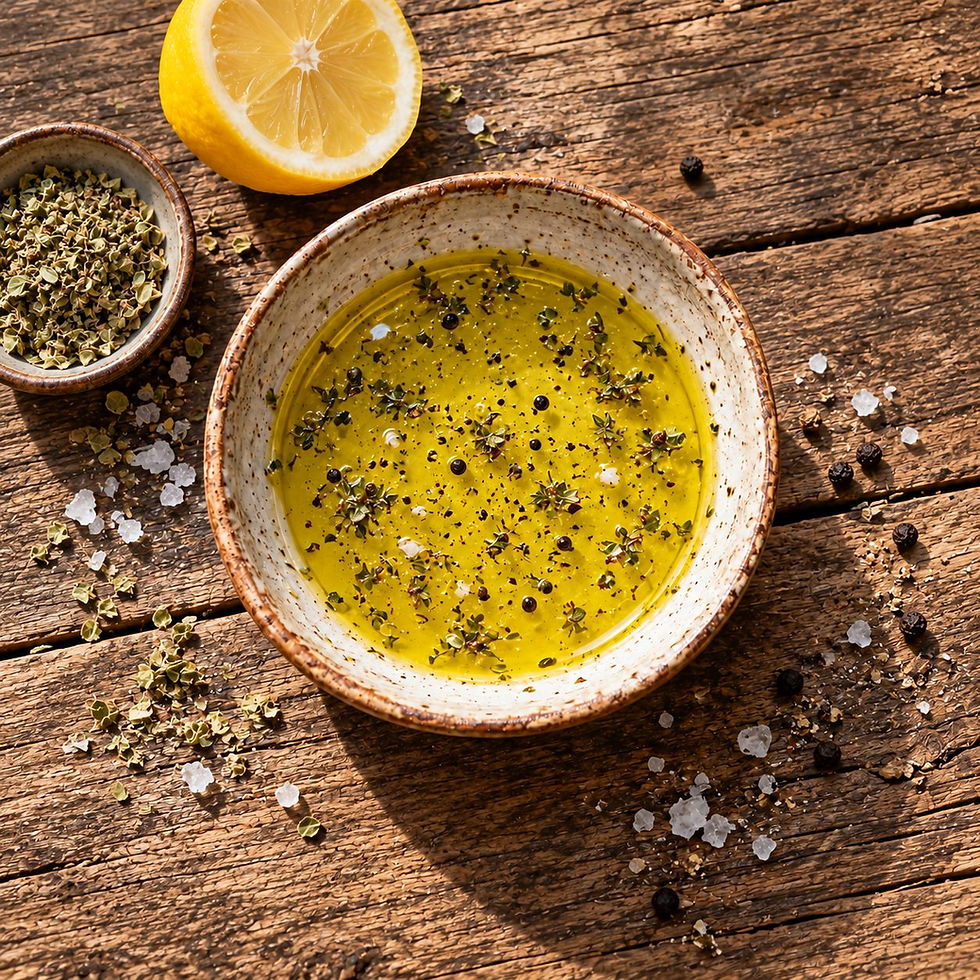
A small bowl of olive oil, lemon, salt, pepper and oregano is placed beside the grilled meat - not as an optional extra, but as part of the meal itself. The same salamoura belongs with grilled fish, boiled wild greens, vegetables, potatoes and roasted vegetables. It is simple, but it changes everything.
For me, the taste of grilled meat in Corfu is inseparable from it. I still cannot decide what I looked forward to more: the meat coming off the charcoal or the salamoura waiting beside it. My memory has kept that combination of flavours more clearly than it has kept many details of those afternoons: the smoke from the grill, the warmth of the food, the brightness of lemon, the dry scent of oregano and the olive oil bringing everything together.
A Corfiot word, a Corfiot habit
If you ask for salamoura in most other parts of Greece, you may be met with a puzzled look. There, olive oil and lemon are usually called ladolémono. The word salamoura is more commonly understood as brine.
In Corfu, however, salamoura means something more specific: a finishing sauce of olive oil, lemon, salt, pepper and oregano.
The word is closely connected to the Venetian salamora, originally used for brine. That linguistic thread makes sense in Corfu, where Venetian influence remains present in the island’s language and food culture. But at the Corfiot table, salamoura has acquired its own meaning. It is not about preserving food. It is about bringing food into focus.
Salamoura is part of Corfu’s gastronomic identity because it expresses a particular way of eating. It trusts the quality of the fish, the meat, the vegetables and, above all, the olive oil. It does not ask for excess. It asks for balance.
Not a sauce to hide behind
Today, we are used to sauces that often do too much. Barbecue sauce, mayonnaise and ready-made dressings can cover a plate in sweetness, smoke, sugar or creaminess. Sometimes that is their purpose: to conceal food that has little to say on its own.
Salamoura follows a completely different logic.
It does not cover the ingredient; it sharpens it. Lemon gives freshness and lift. Salt brings out flavour. Pepper adds a gentle edge. Oregano adds its dry Mediterranean perfume. And olive oil brings the elements together, giving the sauce its body and character.
When the olive oil is good, salamoura has no need to be complicated. It does not compete with the fish, the meat or the vegetables. It gives them brightness, definition and a sense of place.
The food remains the protagonist. Salamoura simply allows it to taste more fully like itself.
The secret is in the fork
The ingredients are simple. The technique matters.
Start with a good extra virgin olive oil in a small bowl. Add fresh lemon juice, salt, black pepper and dried oregano. Then beat it firmly with a fork until the olive oil and lemon come together into a lightly creamy, glossy emulsion.
This is the small secret of a good salamoura. It should not feel like separate oil and lemon on the plate. It should have body: smooth enough to coat the food, yet light enough to keep every flavour clear.
A simple guide is:
4 tablespoons extra virgin olive oil
1 tablespoon fresh lemon juice
A pinch of coarse sea salt
Freshly ground black pepper
A generous pinch of dried oregano
But salamoura is made to be adjusted, not measured with anxiety.
Like it more peppery? Add a little more freshly ground black pepper.
Prefer it saltier? Use a pinch of coarse sea salt, which gives a more distinct texture and flavour.
Want a more herbal, slightly bitter edge? Add a little more dried oregano.
Prefer more acidity? Add a few extra drops of fresh lemon juice.
But keep one principle in mind: olive oil is the king of salamoura. Lemon, oregano, salt and pepper should support it — never take its place. A good salamoura should always taste first of good extra virgin olive oil, then of everything that makes it brighter.
At a Corfiot grill house
If you find yourself at a good traditional grill house in Corfu, ask for salamoura.
Order it on the side with grilled meat or fish, then use it while the food is still hot. But do not keep it at the edge of the plate and merely dip the meat into it.
Spoon it generously over the grilled meat or fish, then turn the pieces so that the salamoura mixes with the natural juices from the grill. Let it coat the surface of the food and settle into the potatoes and vegetables beside it.
That is when the flavours come together. The olive oil, lemon and oregano do not sit separately from the meat; they become part of it. The result is not a sauce served alongside the food, but a final layer of flavour that completes the whole plate.
Beyond the grill
Salamoura is not only for grilled meat and fish.
Pour it over boiled wild greens, green beans, courgettes and potatoes. Add it to roasted vegetables just before serving, while they are still warm. It brings brightness and aroma to food that has been treated simply and well: grilled, boiled or roasted.
That is exactly why it belongs so naturally to the Corfiot kitchen.

Comments